 Countertop Harvest
By the Countertop Harvest team · Last updated · How we choose products
In 1837 Charles Darwin read a short paper to the Geological Society of London called “On the Formation of Mould.” More than forty years later he came back to the same question with a whole book, The Formation of Vegetable Mould through the Action of Worms (1881). We read it with our own herb pots in mind. Below are six things Darwin observed, what university extension guides tell us to do with each one today, and the places where his picture of worms needs updating.
A note before we start: Darwin studied garden and field earthworms. The worms in a kitchen worm bin are red wigglers (Eisenia fetida), and Oregon State says common earthworms and nightcrawlers won't survive in an indoor bin (Oregon State Extension). So we treat his observations as a guide to how worms and soil work, and lean on extension sources for the practical steps.
1. Worms bring fine soil to the surface
Darwin's starting point was a puzzle from several meadows: cinders and burnt marl spread on the surface were found a few inches below the turf a few years later. His explanation, in the book's introduction:
“This apparent sinking of superficial bodies is due, as was first suggested to me by Mr. Wedgwood of Maer Hall in Staffordshire, to the large quantity of fine earth continually brought up to the surface by worms in the form of castings.”
Charles Darwin, 1881, Introduction (Darwin, 1881)
He liked the idea so much that he suggested a new name for topsoil: “Hence the term “animal mould” would be in some respects more appropriate than that commonly used of “vegetable mould.”” (Darwin, 1881) (Introduction). In Chapter III he shows a dug section from a field reclaimed in 1822 and examined in 1837, with the cinder layer buried under stone-free mould.
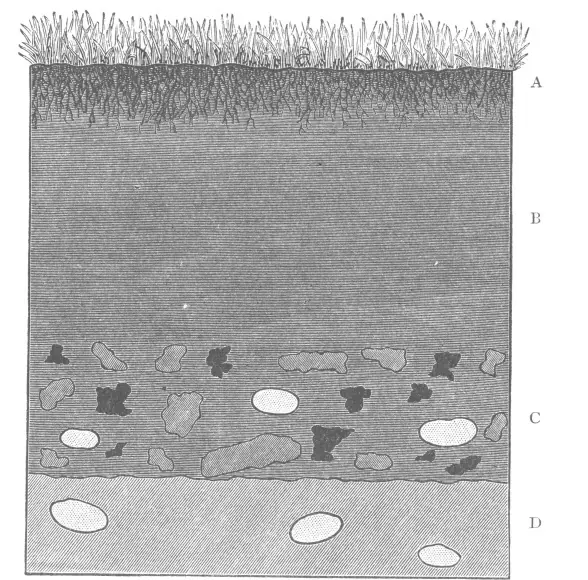
In the book's conclusion he sums up what that sifting means for plants:
“Worms prepare the ground in an excellent manner for the growth of fibrous-rooted plants and for seedlings of all kinds. They periodically expose the mould to the air, and sift it so that no stones larger than the particles which they can swallow are left in it. They mingle the whole intimately together, like a gardener who prepares fine soil for his choicest plants.”
Charles Darwin, 1881, Chapter VII (Conclusion) (Darwin, 1881)
For our herb pots: Worm castings belong mixed into potting mix, not as the whole pot. Maryland sets the limit for indoor and container plants at no more than 1/4 by volume (UMD Extension), and Oregon State says worm compost typically makes up 25% of container soil (Oregon State Extension). Darwin wrote about seedlings in field soil; pure castings are different. Maryland warns they may have a high soluble salt content and should be kept from direct contact with seedling roots (UMD Extension), and Colorado State gives the same salt caution (Colorado State Extension). For a new pot of basil seed, we mix castings through the soil rather than packing them around the seeds.
2. Worms are half water animals
Darwin calls earthworms terrestrial but “still in one sense semi-aquatic”. He reports the French naturalist M. Perrier's results in both directions: worms kept alive for nearly four months fully under water, and a much harsher result the other way:
“M. Perrier found that their exposure to the dry air of a room for only a single night was fatal to them.”
Charles Darwin, 1881, Chapter I (Darwin, 1881)
For our herb pots: A worm bin should stay evenly damp. Oregon State keeps bedding as damp as a wrung-out sponge, where a squeezed handful gives only a few drops (Oregon State Extension), and keeps the bin between about 55°F and 77°F and out of direct sun (Oregon State Extension; UMD Extension). The same need for moisture is why Oregon State says to pick worms out of castings before using them in indoor pots: conditions in a pot are not good for them (Oregon State Extension).
3. Worms have no eyes but still flee light
Darwin first thought worms were blind to light, since he watched them by candle without alarming them. Watching worms in pots on many successive nights, with lamps, colored glass and a lens, changed his mind:
“From the foregoing facts it is evident that light affects worms by its intensity and by its duration.”
Charles Darwin, 1881, Chapter I (Darwin, 1881)
Left under a lamp, he wrote, “worms left exposed before a paraffin lamp or a candle invariably retreated into their burrows within from five to fifteen minutes” (Darwin, 1881) (Chapter I). He also found that only the front end of the body, where the nerve ganglia sit, responded to light.
For our herb pots: This is the reason the easiest harvest method works. Oregon State's “dump and sort” method piles bin contents into small cones under a bright light, waits about 20 minutes, and brushes compost off the top as the worms burrow to the center (Oregon State Extension). It's Darwin's lamp experiment on a kitchen table.
4. Worms grind food with swallowed stones
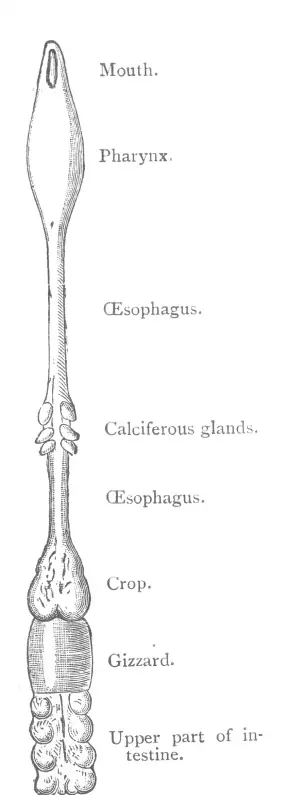
Worms have no teeth or jaws. Darwin describes a muscular gizzard and the tiny grains of sand and stone he regularly found inside it:
“As it is certain that worms swallow many little stones, independently of those swallowed while excavating their burrows, it is probable that they serve, like mill-stones, to triturate their food.”
Charles Darwin, 1881, Chapter I (Darwin, 1881)
For our herb pots: Bin worms need a little grit too. Oregon State adds pulverized eggshells, about 1/2 cup per 14-gallon bin every couple of months, to help worms grind their food, and chops scraps to 1/2 to 1 inch so they break down faster (Oregon State Extension).
5. Worms eat almost anything, but they prefer some leaves
Darwin found worms “omnivorous”: they tugged at meat pinned to the soil of his pots, and “Raw fat seems to be preferred even to raw meat or to any other substance which was given them, and much was consumed.” (Darwin, 1881) (Chapter I). Still, he concluded, “But they live chiefly on half-decayed leaves” (Darwin, 1881) (Chapter I), and he ran many trials to see which leaves they took first. Kitchen herbs did not do well in that contest:
“Pieces of the leaves of cabbage, turnip, horse-radish and onion were left on the pots during 22 days, and were all attacked and had to be renewed; but during the whole of this time leaves of an Artemisia and of the culinary sage, thyme and mint, mingled with the above leaves, were quite neglected excepting those of the mint, which were occasionally and very slightly nibbled.”
Charles Darwin, 1881, Chapter I (Darwin, 1881)
For our herb pots: What worms can eat and what belongs in a kitchen bin are different questions. Oregon State and Maryland both leave out meat, fish, bones, oils and grease, and dairy (Oregon State Extension; UMD Extension). Fruit and vegetable scraps, coffee grounds and crushed eggshells are the staples, and each feeding gets buried under the bedding (Oregon State Extension; UMD Extension). As for herb trimmings, Darwin tested field earthworms, not red wigglers, and we haven't found extension data on herbs in worm bins, so we treat his sage, thyme and mint result as a curiosity, not a rule.
One more food note: wet, half-finished organic matter is where fungus gnats breed. UC IPM lists moist compost and organic fertilizers as favorite breeding spots and advises against incompletely composted material in potting mix (UC IPM). Finished castings only, in a thin layer.
6. Where Darwin needs updating
Darwin ends the book with a big claim:
“Worms have played a more important part in the history of the world than most persons would at first suppose.”
Charles Darwin, 1881, Chapter VII, opening of the conclusion (Darwin, 1881)
Darwin's observations came from English fields, gardens and his own pots. Modern ecologists add a caution he didn't write about: worms are not welcome everywhere. Minnesota's Department of Natural Resources says all of the state's land earthworms are non-native species from Europe and Asia, and that at least seven species are invading hardwood forests and causing the loss of tree seedlings, wildflowers and ferns (Minnesota DNR). To the question “Aren't earthworms good for soil and gardens?” its answer is “It depends” (Minnesota DNR).
His numbers also come from English fields. His estimate that more than ten tons of dry earth pass through worms per acre each year is for “many parts of England” (Darwin, 1881) (Chapter VII), so we don't try to scale it down to a pot.
For our herb pots: Keep bin worms in the bin. Buy red wigglers from an earthworm grower, not a bait shop (NC State Extension). Never dump worms or bin contents in the woods (Minnesota DNR). Before using worm compost outdoors, Great Lakes Worm Watch says to freeze it solid for at least a week, and a month is better, to kill worms and their egg cases (Great Lakes Worm Watch). Castings used in indoor herb pots stay indoors, but if you top-dress a patio planter or garden bed, the freezing step applies.
Smart gardens skip all of this
Darwin's lessons are about soil. In hydroponic smart gardens, Cornell's home hydroponics guide warns that organic fertilizers often form a film that can clog pumps, airstones and tubing (Cornell guide). We keep castings and worm tea out of the water and save them for soil pots.
Ready to use castings? Our worm castings guide covers mixing, top-dressing, worm tea and a small tote bin step by step. For bugs, see the Herb Doctor and the fungus gnat guide.
Frequently asked questions
Was Darwin right about earthworms?
On the main point, yes: his description of worms bringing fine earth to the surface and burying objects under their castings is the basis of his 1881 book, and extension guides still describe worm castings as a valuable soil amendment. Where he needs updating is ecology. The Minnesota DNR says all of that state's land earthworms are non-native and that several species harm hardwood forests by eating the leaf layer that tree seedlings and wildflowers depend on.
Did Darwin study the same worms people use in worm bins?
No. Darwin worked with garden and field earthworms; his diagram of the digestive canal is of Lumbricus. Worm bins use red wigglers (Eisenia fetida), and Oregon State says common earthworms and nightcrawlers won't survive in an indoor bin.
Do worms eat herb leaves?
In Darwin's tests, earthworms left leaves of culinary sage, thyme and mint “quite neglected excepting those of the mint, which were occasionally and very slightly nibbled”, while cabbage, turnip, horse-radish and onion leaves were eaten. Those were earthworms, not red wigglers, and we haven't found extension data on herbs in worm bins.
How much worm castings should go in an herb pot?
No more than about one-quarter of the mix by volume, per University of Maryland and Oregon State extension. Keep pure castings out of direct contact with seedling roots because of their salt content.
Sources
- Charles Darwin, The Formation of Vegetable Mould through the Action of Worms (1881), Project Gutenberg eBook #2355
- University of Maryland Extension: indoor worm composting or vermicomposting
- Oregon State University Extension: composting with worms (EM 9034)
- Colorado State University Extension: choosing a soil amendment
- UC Statewide IPM Program: Pest Notes, fungus gnats
- Cornell University (Ronzoni and Mattson): a guide to home hydroponics for leafy greens (PDF)
- NC State Extension: vermicomposting for households
- Minnesota Department of Natural Resources (with the University of Minnesota Center for Hardwood Ecology): earthworms
- University of Minnesota Duluth, Great Lakes Worm Watch: stop the spread
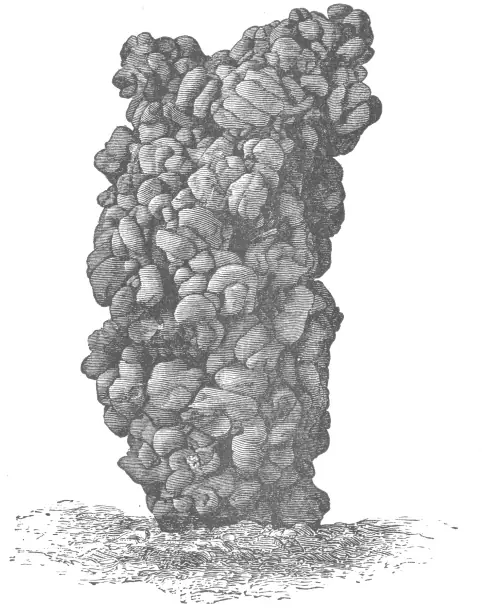
Figures 1, 2 and 5 are Darwin's own illustrations from the 1881 book (public domain), cropped from the images in the Project Gutenberg edition, which reproduces the 1904 John Murray printing. Quotes are from the Project Gutenberg text of the same book.